Antipyretic Activity of Spare Leaf Extract (Erythrina subumbrans (Hassk.) Merr.) on Pepton-Induced Male White Rats (Rattus norvegicus)
DOI:
https://doi.org/10.56127/jukeke.v5i2.2690Keywords:
antipyretic, Erythrina subumbrans, fever, peptone induction , Rattus norvegicusAbstract
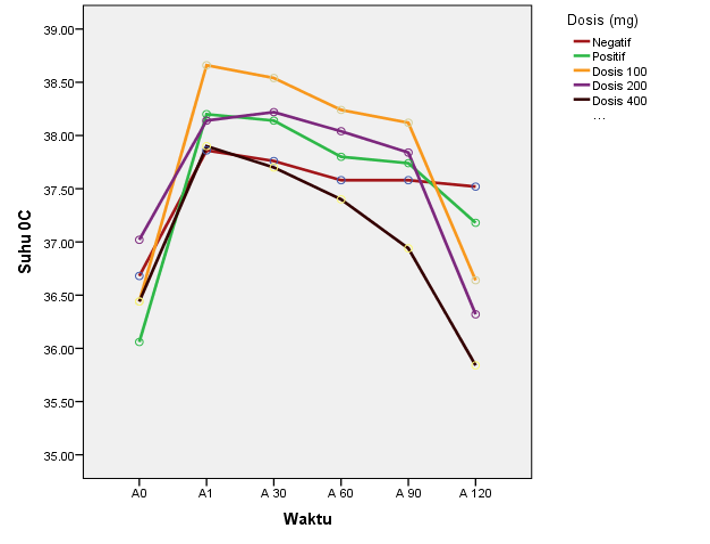
Fever is a common physiological response of the body to infection, inflammation, or other pathological conditions and is characterized by an increase in body temperature above the normal range. Although antipyretic drugs such as paracetamol are widely used to reduce fever, the exploration of medicinal plants as alternative natural antipyretic agents remains important. Dadap serep leaves (Erythrina subumbrans (Hassk.) Merr.) are known to contain bioactive compounds such as flavonoids, saponins, tannins, alkaloids, and polyphenols, which are potentially associated with antipyretic and anti-inflammatory activity. Objective: This study aimed to evaluate the antipyretic activity of dadap serep leaf extract in peptone-induced male white rats (Rattus norvegicus) and to determine the most effective dose among 100, 200, and 400 mg/kgBW. Methods: This research was a laboratory experimental study using a pre-test and post-test control group design. A total of 30 male white rats were divided into five groups: negative control receiving 1% Na-CMC, positive control receiving paracetamol, and three treatment groups receiving dadap serep leaf extract at doses of 100, 200, and 400 mg/kgBW. Fever was induced by subcutaneous injection of 5% peptone, and rectal body temperature was measured at several observation times after treatment. Data were analyzed using One-Way ANOVA followed by the Tukey HSD post hoc test. Findings: The results showed that dadap serep leaf extract reduced rectal body temperature in peptone-induced rats. The strongest antipyretic effect was observed at a dose of 400 mg/kgBW, indicating that higher extract doses may produce a greater reduction in fever temperature. Implications: These findings indicate that dadap serep leaf extract has potential as a natural antipyretic agent and may support the development of plant-based fever management. The results may also provide a scientific basis for the traditional use of dadap serep leaves in reducing fever. Originality: The originality of this study lies in providing experimental evidence on the dose-dependent antipyretic effect of Erythrina subumbrans leaf extract in a peptone-induced fever model of male white rats.
References
Alim, N., Hasanuddin, R., Jasmiadi, J., Musdalifah, M., Hagg, A. I., & Linda, N. (2023). Antipyretic activity of ethanol extract from beligo (Benincasa hispida (Thunb.) Cogn.) fruit flesh in Wistar albino rats (Rattus norvegicus). Jurnal Ilmiah Sains, 23(2), 89-98. https://doi.org/10.35799/jis.v23i2.48443
Amelia, E. K. (2022). Review Artikel: Tanaman Obat yang Memiliki Aktivitas Antipiretik Secara in Vivo. Jurnal Farmasetis, 11(1), 67-76.
Barbi, E., Marzuillo, P., Neri, E., Naviglio, S., & Krauss, B. S. (2017). Fever in Children: Pearls and Pitfalls. Children, 4(9), 81. https://doi.org/10.3390/children4090081
De Martino, M., & Chiarugi, A. (2015). Recent advances in pediatric use of oral paracetamol in fever and pain management. Pain and Therapy, 4(2), 149-168. https://doi.org/10.1007/s40122-015-0040-z PMID - 26518691
Langingi, A. R., Akbar, H., & Kaseger, H. (2020). Pengaruh Penyuluhan Kesehatan Terhadap Tingkat Pengetahuan Ibu dalam Menangani Demam pada Anak di Desa Moyag Todulan. Graha Medika, 3(1), 1-9.
Mochtar, C. F., Aisyiyah, N. M., Husna, Q. a. A., Hamzah, H., Bakhtiar, M. I., Devi, R. S., Varizza, F. P., Faradillah, A., Hafidzah, E., Suriati, S., & Damis, N. L. (2023). Antipyretic and antiinflammatory activities of bopot leaf extract from Kutai Kartanegara District. Indonesian Journal of Pharmaceutical Science and Technology, Suppl. 5(1), 80-89. https://doi.org/10.24198/ijpst.v0i0.46188
Nurfadhila, L., Rahmawati, M., Fitri, N. K., Nibullah, S. G., & Windari, W. (2023). Analisis senyawa acetaminophen dalam sampel biologis dengan berbagai macam metode. Journal of Pharmaceutical Science, 6(3), 1221-1237. https://doi.org/10.36490/journal-jps.com.v6i3.197
Pariata, I. K., & Suta, I. B. P. (2022). Manfaat Dadap Serep (Erythrina subumbrans) Untuk Mengatasi Demam Pada Anak. 4(1), 24-37.
Patala, R., & Awilia, N. (2023). Analisis kadar parasetamol generik dibandingkan bermerek dagang. Jurnal Farmasi, 7(1), 7-12.
Priolaningsih, D. R., Susilowati, A. A., & As, Y. (2025). Effectiveness of Transdermal Antipyretic Patch from Dadap Serep (Erythrina subumbrans (Hassk.) Merr.) Leaf Extract on White Mice (Mus musculus) Hyperthermia Model. Berkala Ilmiah Kimia Farmasi, 12(1), 28-35. https://doi.org/10.20473/bikfar.v12i1.61759
Purwasih, R., Endah, S. R. N., & Nofriyaldi, A. (2023). Formulasi dan Uji Aktivitas Sediaan Plester Hidrogel Ekstrak Etanol Daun Randu (Ceiba pentandra (L.) Gaertn) sebagai Antipiretik. Jurnal Sains dan Kesehatan, 5(6), 941-952. https://doi.org/10.25026/jsk.v5i6.2030
Rangkuti. (2023). Uji Aktivitas Analgetik Ekstrak Etanol 70% Daun Dadap Serep (Erythrina subumbrans (Hassk.) Merr.) pada Mencit Putih Jantan Galur Deutschland Denken Yoken. X(2), 17-27.
Sani, F. K., Nazifah, N., & Muhaimin, M. (2022). Uji aktivitas analgetik ekstrak etanol daun ekor naga (Rhaphidophora pinnata (L.f) Schott) pada mencit putih jantan. Jurnal Ilmiah Pharmacy, 9(1), 35-48. https://doi.org/10.52161/jiphar.v9i1.396
Sullivan, J. E., & Farrar, H. C. (2011). Fever and Antipyretic Use in Children. Pediatrics, 127(3), 580-587. https://doi.org/10.1542/peds.2010-3852
Taribuka, N., Rochmaedah, S., & Silawane, I. (2020). Gambaran Pengetahuan Dan Penatalaksanaan Ibu Dalam Menangani Hipertermi Pada Balita Di Wilayah Kerja Puskesmas Perawatan Haria Kecamatan Saparua Kabupaten Maluku Tengah Tahun 2020. Global Health Science, 5(3), 145. https://doi.org/10.33846/ghs5309
Walter, E. J., Hanna-Jumma, S., Carraretto, M., & Forni, L. (2016). The Pathophysiological Basis and Consequences of Fever. Critical Care, 20, 200. https://doi.org/10.1186/s13054-016-1375-5
Widyasari, R., & Ratiningsih, R. (2017). Uji aktivitas antipiretik ekstrak etanol kulit jeruk manis (Citrus x aurantium L.) terhadap tikus putih (Rattus norvegicus) jantan galur Wistar yang diinduksi pepton 5%. Jurnal Ilmiah Ibnu Sina, 2(2), 204-213.