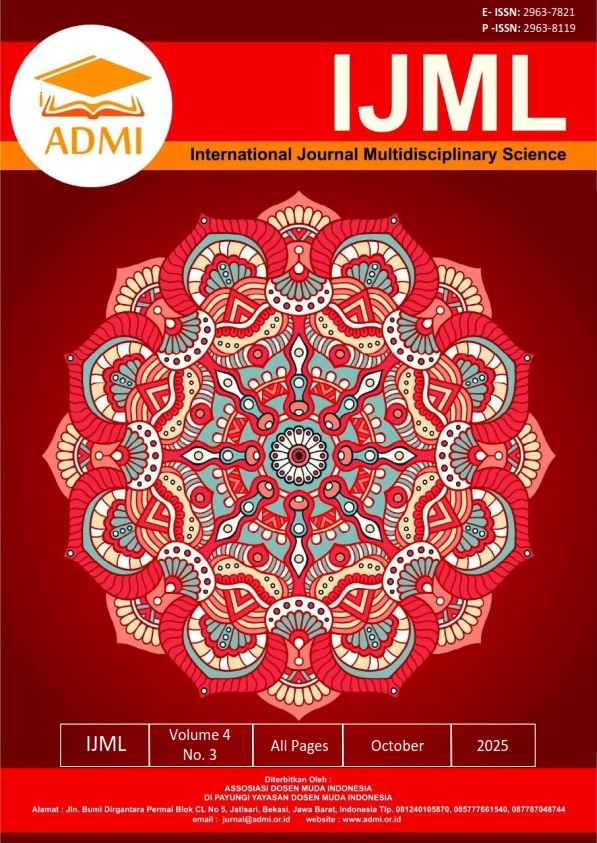
Analyzing the English translation of People-Pleasing Behaviors mentioned in Tom Lembong’s Instagram Caption
DOI:
https://doi.org/10.56127/ijml.v4i3.2589Keywords:
Instagram, translation, people-pleasing behavior, paraphrasingAbstract
Instagram allows users to include captions of up to 2,200 characters beneath posted visual content, including images and videos. These captions provide a space for users to offer explanations, contextual information, or personal viewpoints related to the accompanying visuals. This research analyzes the English translation of people-pleasing behaviors mentioned in Tom Lembong’s Instagram caption. In the target language (English), there are two linguistic units: “reluctance to offend” and “fearing to offend.” These two translation units prioritize the intended meaning over preserving the original terms, which may result in deviations from the source terminology, thereby reflecting the use of paraphrasing. The researcher hopes that the findings of this study will contribute to the field of translation, particularly to the translation of behavioral terms.
References
Anderson, B. (1972). The idea of power in Javanese culture. Culture and politics in Indonesia, 1, 70.
Barker, K. L. (2007). The Balanced Translation Philosophy of the TNIV. Theory and Practice in Language Studies, No. 1.
Beattie, M. (1986). Codependent no more: How to stop controlling others and start caring for yourself. Hazelden Publishing.
Braiker, H. B. 2001. The Disease to Please: Curing the People‐Pleasing Syndrome. McGraw‐Hill.
Creswell, J. W. (2012). Educational research: Planning, conducting, and evaluating quantitative and qualitative research (4th ed.). Pearson
Felicita Sonya, A. M., Erni Hastuti, & Teddy Oswari. (2025). Translation Strategy of Psychological Terms in the Book Thinking, Fast and Slow. Journal of English Language Teaching and English Linguistics, 10(2), 1–10.
Fraenkel, J. R., & Wallen, N. E. (1990). How to design and evaluate research in education. McGraw-Hill.
Hanif, F. D., Oktafiani, R. A., Rachmawati, D. K., & Sasikirana, T. V. (2025). People pleaser behavior within the perspective of sungkan: A psycho anthropological interpretation. Jurnal Antropologi: Isu Isu Sosial Budaya, 27(2), 249–259.
Hoed, B.H. (2006). Penerjemahan dan Kebudayaan. Jakarta: Pustaka Jaya.
Körner, R., & Altmann, T. (2025). Power in friendships: How experienced and desired power are associated with relationship functioning. Journal of Social and Personal Relationships, 42(9), 2335-2362.
Nida, E.A. &Taber, C.R. (1969).The Theory and Practice of Translation. Leiden: E.J Brill.
Nord, C. (1999). Translating as a Purposeful Activity: Functionalist Approaches Explained. Shanghai Foreign Language Education Press.
Paris, B. J. (1994). Karen Horney: A psychoanalyst’s search for self-understanding. Yale University Press.
Shen, L. (2022). On Translation of Psychological Terminology. Open Journal of Social Sciences, 10, 315-323.
Tempo Publishing. (2024). Politik Thomas Lembong, dari BPPN Hingga Pilpres 2024. Tempo Publishing.
Walker, P. (2013). Complex PTSD: From surviving to thriving: A guide and map for recovering from childhood trauma. CreateSpace Independent Publishing Platform.
Downloads
Published
Issue
Section
Citation Check
License
Copyright (c) 2025 Raden Roro Shinta Felisia

This work is licensed under a Creative Commons Attribution-ShareAlike 4.0 International License.