Quality Control of Plastic Pallet Products Using the Taguchi Method to Reduce Product Rejection: A Case Study on the Sound 1800 Machine
DOI:
https://doi.org/10.56127/juit.v5i2.2755Keywords:
fishbone diagram, injection molding, plastic pallet, quality control, Taguchi methodAbstract
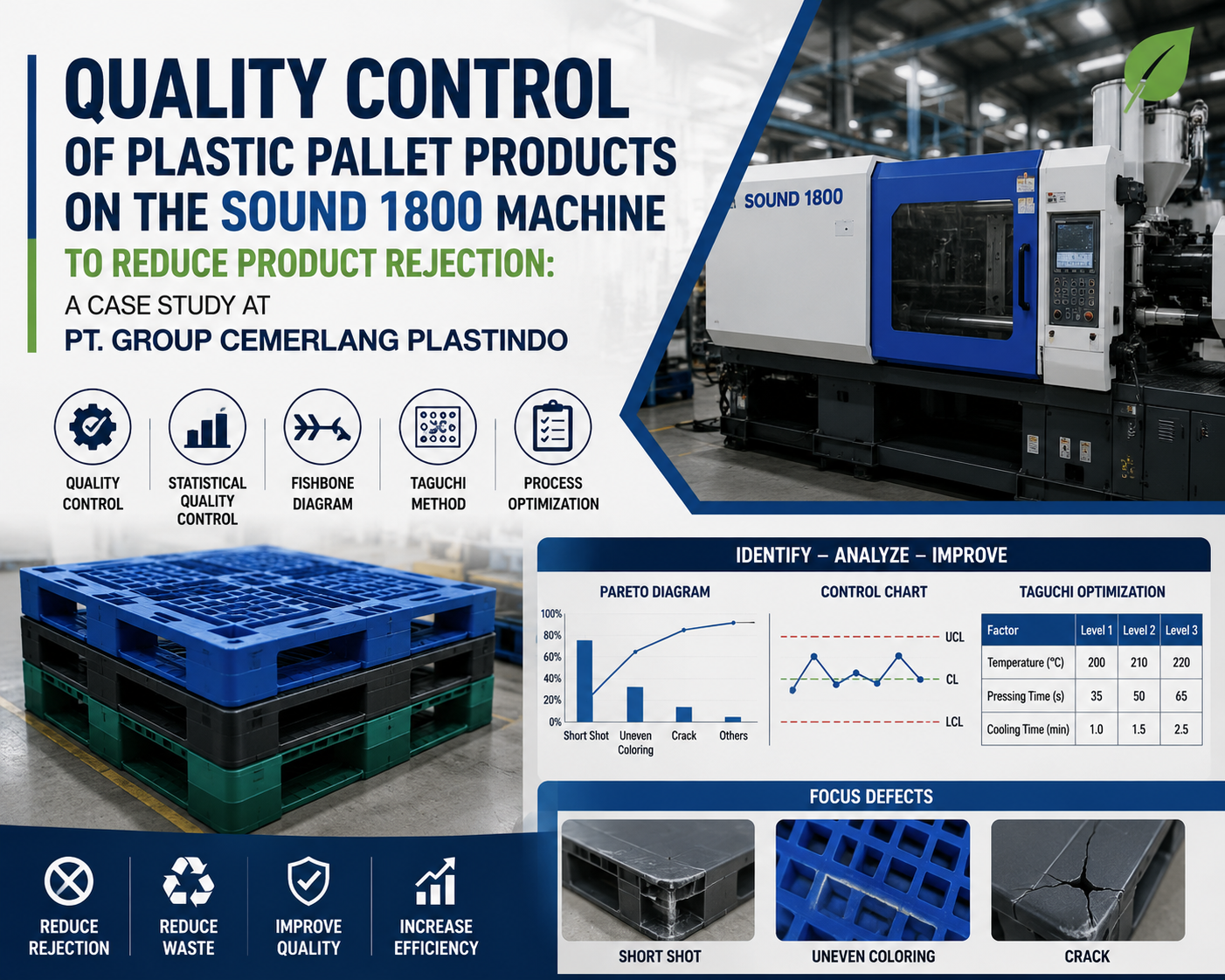
PT Group Cemerlang Plastindo continues to experience product rejection in the plastic pallet production process using the Sound 1800 injection molding machine. This condition reduces product quality, increases material waste, and decreases production efficiency, indicating the need for effective quality control and process parameter optimization. Objective: This study aims to identify the dominant types of product rejection, analyze the factors causing product defects, and determine the optimal combination of process parameters to reduce the reject rate of plastic pallet products. Methods: This study employed a quantitative approach using the Taguchi method supported by Statistical Quality Control (SQC) tools, including check sheets, histograms, Pareto diagrams, control charts, and fishbone diagrams. Data were collected from production records between January 2025 and January 2026, direct observations, and interviews with production personnel. Results: The results showed that 2,499 products were rejected from a total production of 107,669 plastic pallets. The dominant defects were short shot (998 units), uneven coloring (708 units), and crack (505 units). The application of the Taguchi method reduced the number of rejected products from 383 units to 332 units, corresponding to a 0.39% reduction in the reject ratio, indicating that process parameter optimization improved production quality. Implications: The findings demonstrate that integrating Statistical Quality Control tools with the Taguchi method provides an effective approach for identifying dominant defects, determining optimal process parameters, reducing production waste, and improving product quality consistency. The recommended parameter settings can serve as a practical reference for quality improvement in industrial injection molding operations. Originality: The originality of this study lies in the integration of Statistical Quality Control tools and the Taguchi method to optimize process parameters for plastic pallet production on the Sound 1800 injection molding machine using actual industrial production data. This integrated approach provides a practical quality improvement strategy for reducing the three dominant rejection types under real manufacturing conditions.
References
Aunillah, M. W. S., & Himawan, H. (2022). Analisis pengendalian kualitas produksi batu menggunakan metode seven tools. Sigma Teknika, 5(1), 30-38.
Chaciński, T., & Sutowski, P. (2021). Common defects in injection molding of plastic products and their influence on product quality. Journal of Mechanical and Energy Engineering, 5(1), 7-14. https://doi.org/10.30464/jmee.2021.5.1.7
Fadlillah, S. F., & Hardjito, A. (2025). Pengaruh injection pressure, holding pressure, dan nozzle temperature terhadap cacat flash pada proses injection molding produk tutup kemasan roll on bahan polypropylene dengan metode Taguchi. Jurnal Teknik Industri, 2(2), 118-125.
Hairiyah, N., Amalia, R. R., & Luliyanti, E. (2019). Analisis Statistical Quality Control (SQC) pada Produksi Roti di Aremania Bakery. Industria: Jurnal Teknologi dan Manajemen Agroindustri, 8(1), 41-48. https://doi.org/10.21776/ub.industria.2019.008.01.5
Hamzaçebi, C. (2020). Taguchi Method as a Robust Design Tool. In Quality Control and Optimization Methods. https://doi.org/10.5772/intechopen.93834
Intan, S. N., & Supriyadi, E. (2024). Perancangan perbaikan kualitas produk menggunakan metode Taguchi. Sistemik: Jurnal Ilmiah Nasional Bidang Ilmu Teknik, 12(1), 77-81.
Lestari, F. A., & Purwatmini, N. (2021). Pengendalian kualitas produk tekstil menggunakan metode DMAIC. Jurnal Ecodemica, 5(1), 79-85.
Maulidia, P. R., Budiharti, N., & Adriantantri, E. (2020). Analisis pengendalian kualitas menggunakan metode Taguchi pada UMKM Rubber Seal RM Products Genuine Parts Sukun, Malang. Jurnal Valtech, 3(2), 82-91.
Moayyedian, M., Abhary, K., & Marian, R. (2021). Optimization of injection molding process parameters for polypropylene components using Taguchi design and numerical simulation. Polymers, 13(23), 4158. https://doi.org/10.3390/polym13234158
Nazia, S., & Fuad, M. (2023). Peranan statistical quality control dalam pengendalian kualitas: Studi literatur. Jurnal Manajemen dan Bisnis, 4, 125-138.
Nazia, S., Fuad, M., & Safrizal. (2023). Peranan Statistical Quality Control (SQC) dalam Pengendalian Kualitas: Studi Literatur. Jurnal Mahasiswa Akuntansi Samudra, 4, 125-138.
Pradana, E. S., & Sulistiyowati, W. (2022). Literature review: Penggunaan metode Taguchi untuk peningkatan kualitas. Jurnal Teknik Industri, 6(2), 85-96.
Rachman, F., Setiawan, T. A., Karuniawan, B. W., & Maya, R. A. (2019). Penerapan Metode Taguchi dalam Optimasi Parameter pada Proses Electrical Discharge Machining (EDM). J Statistika: Jurnal Ilmiah Teori dan Aplikasi Statistika, 12(1), 7-12. https://doi.org/10.36456/jstat.vol12.no1.a1991
Ramadhan, R., & Bisono, F. (2024). Optimasi parameter injection molding menggunakan metode Taguchi. Jurnal Teknik Mesin dan Industri, 1(1), 1-10.
Downloads
Published
How to Cite
Issue
Section
Citation Check
License
Copyright (c) 2026 Febiola Alyza Kusuma, Siti Muhimatul Khoiroh

This work is licensed under a Creative Commons Attribution-ShareAlike 4.0 International License.